What a Three-Way Forklift Is and How It Differs
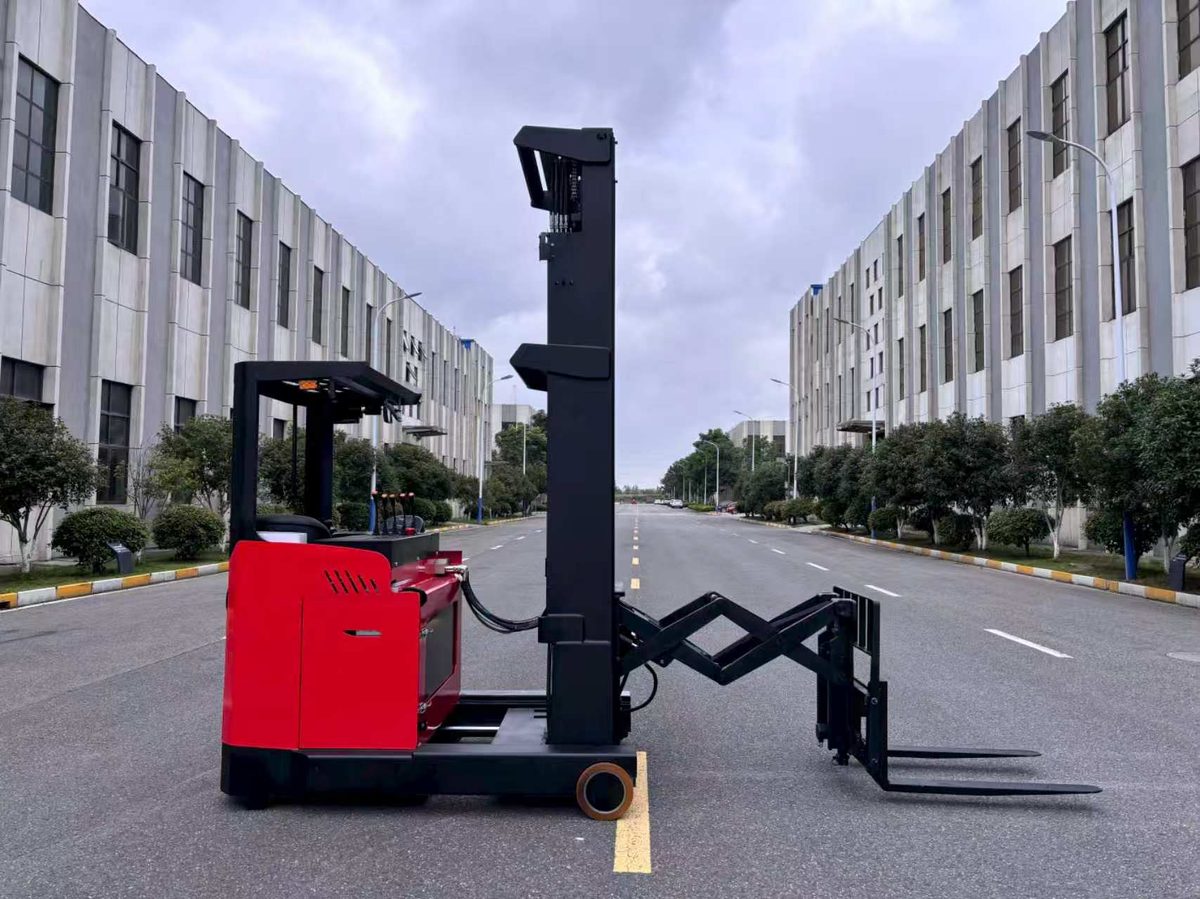
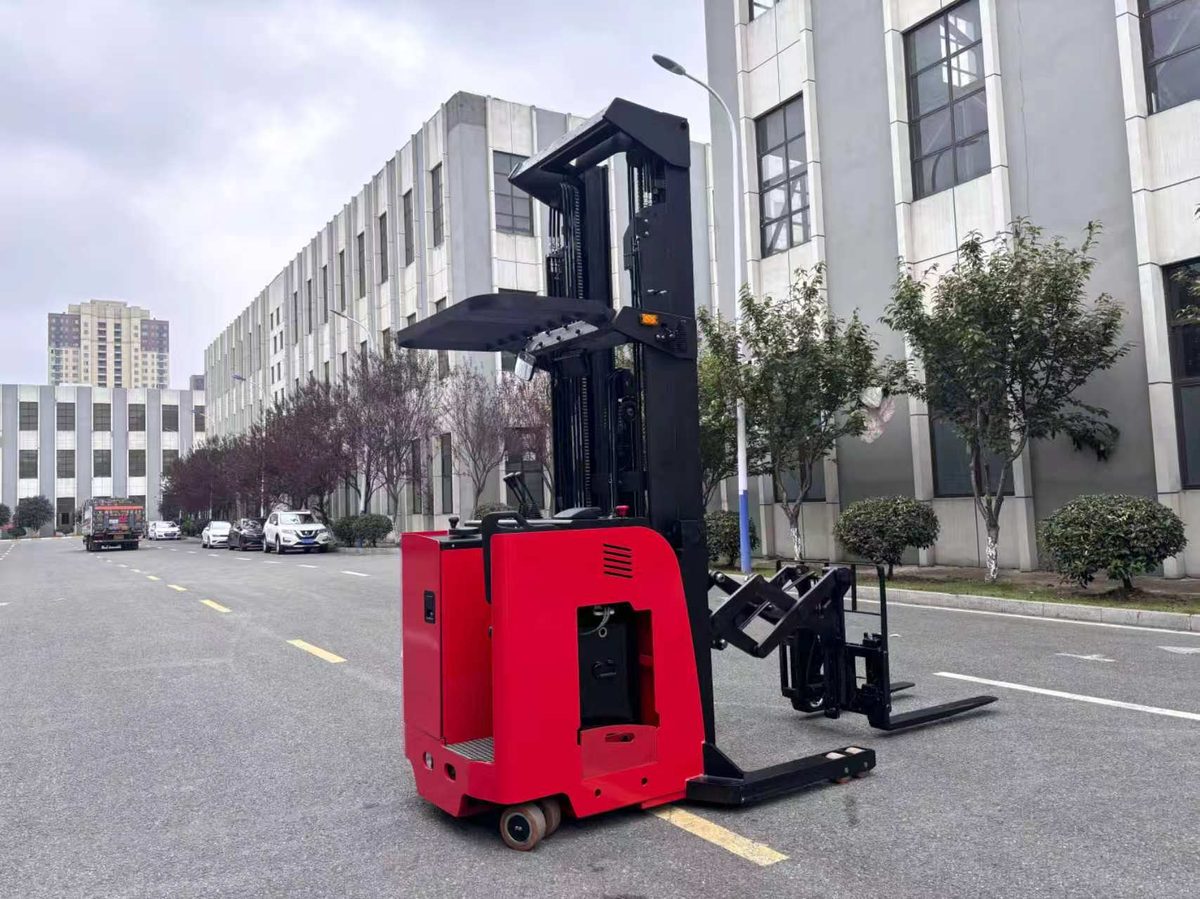
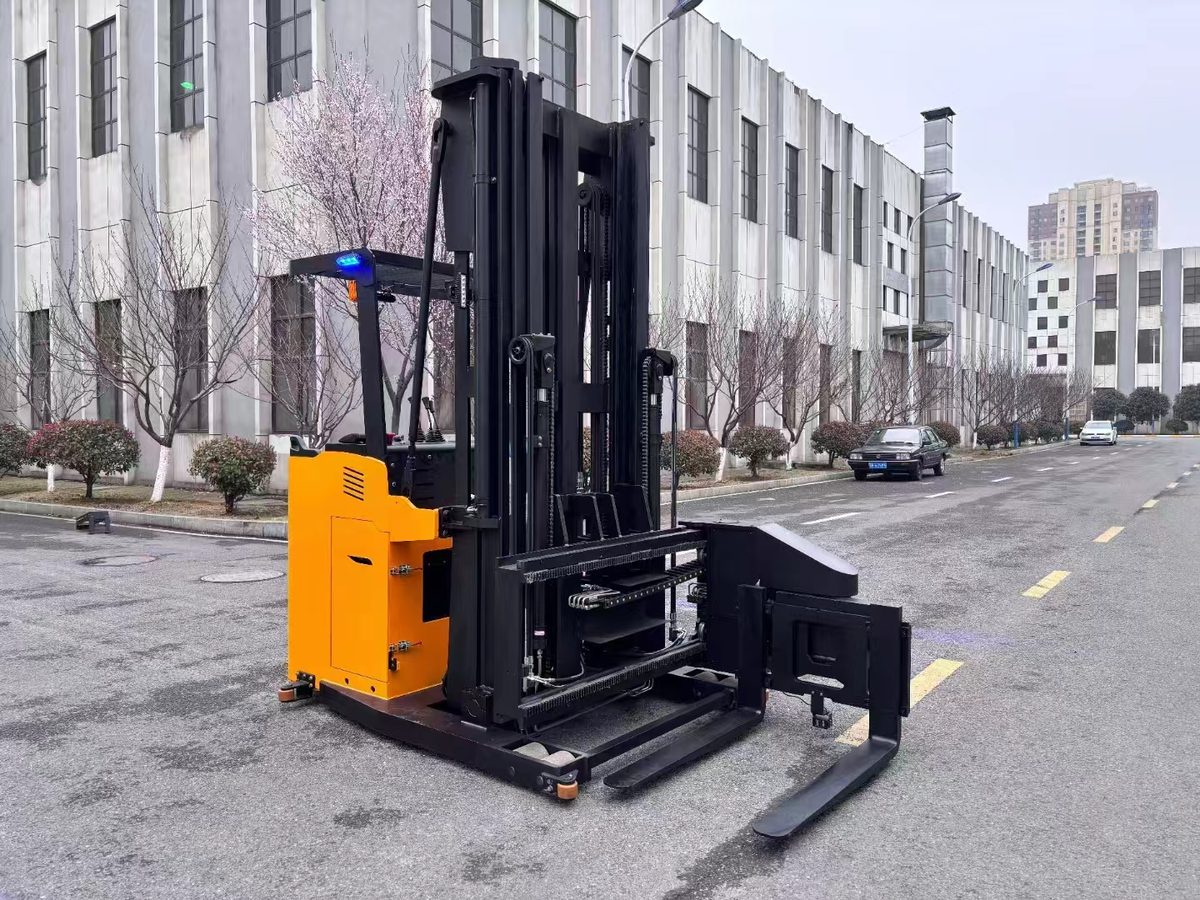
The basic difference
A normal counterbalance forklift carries the load in front of the wheels and turns the whole vehicle to place it. A three-way forklift stays parallel to the racking and rotates the fork carriage instead — through 180 degrees, with an additional lateral shift. That is what allows it to work in an aisle the width of the truck itself.
What it can do that others cannot
Enter a 1.65 to 2.0 metre aisle with a 1.2 metre long load. Pick from either side of the aisle without reversing. Handle long goods — timber, pipes, profiles — by rotating the load to align with the aisle.
The trade-off is that the fork carriage is a precision mechanism. Rotation and side-shift add roughly 400 to 700 millimetres of lost load centre, meaning a truck rated at 1,500 kg at 600 millimetres may only carry 1,000 kg once the attachment is fitted.
Where it costs you time
A three-way forklift is slower than a reach truck on a straight run. Travel speed is typically limited to 8 to 10 km/h inside the aisle, and every operation involves rotating, positioning and levelling before the fork enters the racking.
Cycle time for a put-away is usually 20 to 40 percent longer than a reach truck in a 2.5 metre aisle, so the gain only materialises when the aisle width saving lets you fit one more racking bay per warehouse — that is where the real return comes from.
Maintenance reality
The rotation and side-shift assembly needs scheduled inspection — typically every 500 operating hours — for wear on the rotation bearing, the side-shift guides and the hydraulic hoses that flex with every rotation. Budget 30 to 50 percent more maintenance than a comparable reach truck.
When it is the wrong choice
If your aisle can be widened to 2.4 metres, a reach truck is cheaper to buy, faster to operate and easier to maintain. Three-way trucks make sense when the building constrains the aisle width or when the cost of extra floor area is high — city centre warehouses, cold stores, and existing buildings being re-racked.
Key Takeaway
Narrow aisle trucks are specified by the aisle width they can work in, not by rated capacity alone. Three-way trucks rotate and side-shift the fork to work in 1.65 to 2.0 metres; reach trucks work from 2.4 metres; counterbalance trucks need 3.5 metres or more. WR Forklift manufactures three-way narrow aisle forklifts, reach trucks and AGV pallet trucks in Taizhou, Jiangsu Province, dispatch within 24-72 hours on standard configurations.
Contact us for a specification discussion or view our Alibaba store.